
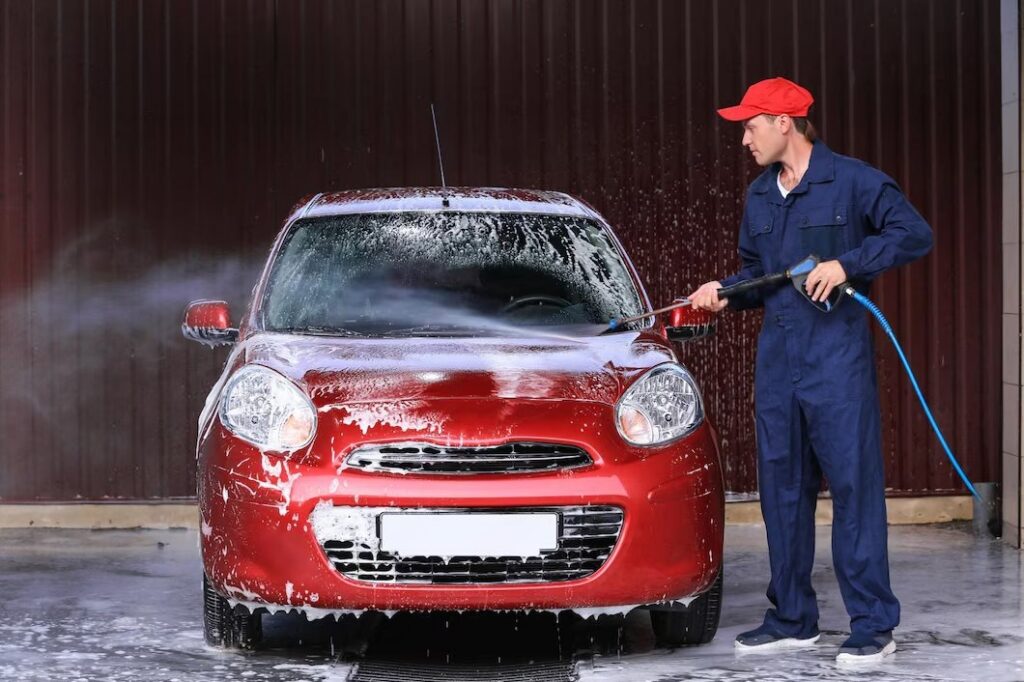
Touchless Car Wash in Tampa vs Brush: Which Is Safer For Your Car Paint In 2026?
Paint repairs are getting pricier, and modern clear coats are thinner than most drivers realize. A full-panel repaint can easily run into the thousands, so it makes sense that “does car wash scratch paint” is one of the most searched car-care questions in 2026. If you’ve ever stared at swirl marks under Florida sun and wondered if your last wash caused it, you’re not alone.
This guide breaks down touchless car wash Tampa vs brush using real-world risk factors: friction, chemistry, maintenance, and your car’s specific paint condition. You’ll learn the safest car wash method for different scenarios, what “brushless car wash in Tampa” actually means, the automatic wash pros cons, and which car detailing myths need to retire for good.
Why car washes can damage paint (and what “damage” really means)
Most paint “damage” from washing is not deep scratches into color coat. It is usually micro-marring: tiny clear-coat abrasions that show up as haze or swirls in direct light. The risk comes down to two variables: friction and contamination.
Friction is the main culprit
Any time a surface touches paint (cloth, brush, towel, even your hand-wash mitt), it can create micro-abrasion if grit is present. This is why two identical “brush” washes can perform very differently depending on equipment condition and how well the wash removes grit before contact.
Common sources of paint-contaminating grit include:
- Road dust and sand
- Construction debris
- Brake dust particles
- Dried mud residue
- Tree pollen and organic debris
Chemistry can trade “no touch” for “more aggressive” soap
Touchless systems compensate for the lack of friction with stronger detergents and dwell time. That can be a win for safety, but it can also be harsh on older waxes and some sealants if overused, especially when combined with frequent washing in hot weather.
Modern vehicles still use durable paint, but expectations changed
OEM paint systems are engineered for durability, but glossy finishes and darker colors reveal defects more easily. A key reality: the “safest” method depends on what you’re optimizing for (least marring vs best cleaning vs best protection longevity).
Touchless car wash: how it works and paint-safety tradeoffs
A touchless (brushless) automatic wash uses high-pressure water, pre-soaks, detergents, and rinse chemistry to clean without physical contact. For drivers worried about “does car wash scratch paint,” touchless is attractive because it removes the biggest variable: contact friction.
What to watch for in Tampa conditions
Florida heat can bake contaminants onto paint fast. If you regularly drive I-275 or cross-county highways, you may need occasional targeted pre-treatment (bug remover on the bumper) to keep touchless results strong without cranking chemical intensity too often.
Evidence checkpoint: Consumer awareness of micro-marring has grown alongside social media detailing content. For example, Google Trends shows sustained elevated interest in “swirl marks” and “paint correction” queries compared to pre-2020 baselines (Google Trends, 2025). This is not “damage panic” so much as people learning what to look for under LED lighting.
Brush (soft-touch) car wash: how it works and what actually causes swirls
“Brush wash” is a broad label. Modern soft-touch washes often use foam or cloth media, not the stiff bristles people remember from decades ago. Still, any contact system can scratch if contamination is dragged across paint.
The real risk is maintenance, not the concept of contact
Soft-touch systems can be very paint-friendly when they follow best practices:
How to judge a brush wash quickly
If you can, look at the wash’s entry process. A strong sign of a paint-conscious operation is a thorough pre-soak and rinse cycle before contact. If the contact media looks visibly dirty or worn, that’s your cue to choose touchless or hand wash.
Positive signs of a quality operation include:
- Clean-looking wash materials
- Well-maintained tunnel equipment
- Strong pre-rinse coverage
- Professional facility appearance
- Consistent vehicle traffic and upkeep
Evidence checkpoint: In controlled paint-care testing, micro-scratching is strongly linked to abrasive particle presence and contact. Industry training materials from the International Carwash Association emphasize that pre-rinse and chemistry are critical to reducing friction-related marring(International Carwash Association, 2024).
Touchless vs brush: side-by-side comparison for Tampa drivers
Below is a practical comparison focused on paint safety, cleaning performance, and real-life use. Use it as a quick decision tool when you’re choosing the safest car wash method for your situation.
| Factor | Touchless (brushless) wash | Brush (soft-touch) wash |
|---|---|---|
| Paint marring risk | Lowest due to minimal contact; risk mainly from high pressure on weak paint edges | Medium; depends on pre-rinse quality and media cleanliness |
| Cleaning strength | Good on light dirt; can struggle with heavy film and bugs | Very goodon road film and stuck-on grime due to agitation |
| Effect on wax/sealant | Can be harsher if chemistry is strong; watch frequent use | Usually gentler chemistry, but friction can reduce topper longevity |
| Best use case | Newer cars, darker colors, frequent washers, ceramic-coated vehicles | Work vehicles, SUVs in rainy season, cars parked outdoors under trees |
| What to check before choosing | Water spotting control, rinse quality, drying performance | Media condition, pre-soak coverage, tunnel cleanliness |
Benchmark context: The U.S. car wash market continues to expand, driven by convenience and subscription models. The International Carwash Association reported the U.S. professional car wash industry at roughly $15 billion+in annual revenue in recent reporting (International Carwash Association, 2024). More volume means paint-safe processes matter more than ever.
What’s changed in 2026: materials, coatings, and the “new normal” for safe washing
Car care in 2026 is shaped by three big shifts: better coatings, smarter wash chemistry, and a stronger focus on water quality and reclaim systems.
More cars have ceramic coatings (and they change the game)
Ceramic coatings are now mainstream, not niche. Coatings reduce dirt bonding, which means touchless systems perform better than they used to on coated paint. According to Grand View Research, the global car wash services market is projected to grow steadily through the decade, with convenience and premium wash plans supporting growth (Grand View Research, 2025). That growth is tied to higher consumer expectations for finish quality.
Better detergents, more targeted chemistry
Leading operators increasingly use multi-step presoaks that target specific soil types (organic bugs, inorganic dust, oily road film). This reduces the need for aggressive “one-size-fits-all” alkalinity, improving compatibility with waxes and sealants.
Modern wash chemistry may target:
- Bug residue
- Road film
- Grease and oil contamination
- Mineral deposits
- Organic debris and pollen
Water quality is getting more attention
Spot-free rinses and better filtration matter in Tampa because heat accelerates evaporation. The EPA continues to highlight water conservation and reclamation as priorities across industries, and car washes increasingly use reclaim systems to cut freshwater use (U.S. EPA, 2025). For drivers, this translates to fewer mineral spots when a wash invests in final-rinse quality.
BluSwan Express Carwash offers free wash, visit here to learn more.
Practical decision framework: choose the safest car wash method for your situation
If you’re stuck between touchless car wash Tampa vs brush, use this quick framework. It is designed to help you minimize paint risk while still getting a genuinely clean car.
If your paint is already swirled
A “safer” wash will prevent adding more, but it will not remove existing marring. If swirls bother you, consider a one-step polish from a reputable detailer, then maintain with touchless or careful soft-touch. This is where the car detailing myths show up most: washing does not “fix” swirls, it only avoids creating new ones.
To minimize additional marring:
- Wash more frequently before dirt accumulates
- Avoid wiping dusty surfaces
- Use clean drying materials
- Maintain wax or coating protection
- Choose reputable wash facilities
Practical local note: If you’re comparing a brushless car wash Tampa option versus a soft-touch tunnel, the better choice is often the one with better process control: strong pre-soak, consistent rinse, and well-maintained equipment.
Common mistakes to avoid (and pro tips that actually work)
Most paint problems blamed on “automatic washes” come from a few repeatable habits. Fix these and your finish will look better month after month.
Pro tips for a safer, cleaner result
If you want a simple routine, build consistency first, then optimize. BluSwan Express Carwash can be a convenient stop for regular washes so dirt never becomes a paint-risk problem.
Conclusion: the safer choice depends on dirt level and wash quality
If you’re optimizing for paint safety, the “winner” is not universal. Touchless minimizes contact risk, while soft-touch often cleans better when your vehicle is truly dirty. Your best move is to match the method to the conditions and avoid the habits that create swirls after the wash.
If you want a simple routine you can stick with, make regular washing the habit and let the chemistry and process do the work. For a consistent clean that fits a busy schedule, stop by BluSwan Express Carwash and keep your paint looking sharp week after week.
Next step: assess your car’s typical dirt level for the past month, then pick a default wash type and a backup option for “extra dirty” weeks. If you want help choosing the right routine for your finish, BluSwan Express Carwash is a solid place to start building a paint-safe habit in 2026.
Frequently asked questions (FAQs)
Does a car wash scratch paint?
It can. Scratching usually comes from grit plus friction, not from water or soap alone. Touchless reduces friction, while soft-touch depends heavily on pre-rinse quality and clean wash media.
Is touchless always the safest car wash method?
Touchless is usually safest for minimizing swirl marks because there is little to no contact. But if your car is very dirty, touchless may leave film behind, and you might scrub it off later at home, which can be worse. The safest choice is the one that gets the car clean with the least risky follow-up wiping.
What is the difference between touchless and brushless car wash Tampa options?
In most cases, “brushless” is just another way of saying touchless. The system relies on detergents, pressure, and rinsing rather than brushes or cloth. Always verify what the wash actually uses because naming is not consistent.
Are modern “brush” car washes still dangerous?
Not automatically. Many modern soft-touch tunnels use foam or cloth materials designed to be paint-friendly, and they can clean better than touchless. The main risk is poor maintenance that allows embedded grit to contact paint.
How often should I use a touchless wash in Tampa?
Every 1 to 2 weeks is a practical cadence for most daily drivers, especially in rainy months and high pollen periods. Frequent washing prevents heavy contamination buildup that is harder to remove safely. If you notice your wax or sealant fading quickly, reduce frequency or add protection more often.
Can a touchless wash remove bugs and lovebugs?
Sometimes, but not reliably if the bugs have baked on. Pre-treat the bumper and mirrors with a bug remover, then wash soon after driving. The faster you remove bugs, the less you need aggressive chemistry or scrubbing.
Should I avoid automatic washes if I have a ceramic coating?
No, but choose wisely. Touchless often works great on coated cars because dirt releases easier, and it reduces swirl risk. Avoid harsh detergent cycles too frequently and consider a coating-safe topper to keep beading strong.
What is the best way to prevent swirl marks after any car wash?
Avoid wiping a dry or dusty surface, and never use a dirty towel. If you must dry, use a clean, high-quality microfiber and light pressure, or rely on a good drying step and drive airflow. Keeping a protective layer on the paint also helps reduce friction.
Is hand washing always safer than an automatic wash?
Only if it is done correctly. A one-bucket wash with a dirty sponge can create more swirls than a well-run automatic wash. The safest approach is whichever method controls grit, uses clean tools, and minimizes unnecessary contact.
How do I choose between touchless car wash Tampa vs brush for a black car?
Black paint shows micro-marring the most, so touchless is usually the safer default for routine washes. If you need deeper cleaning, choose a reputable soft-touch wash with a strong pre-rinse, then avoid aggressive towel drying afterward. Consistent protection makes either option safer.